

Mission Statement: Components, Length, Writing Process, Vision and Values Difference, Quality Criteria, Types, Slogan Difference, Marketing Role and Measurement, Review Frequency, Placement
A mission statement is a short written declaration of an organization’s core purpose, its audience, and what it does. Key aspects include length, components, vision and values difference, writing process, types, quality criteria, marketing role and measurement, slogan difference, placement, and review frequency. In marketing, it guides how you shape messaging, choose channels, and keep every campaign consistent with the organization’s purpose. Whether you run an in-house team or work with an online marketing company, the statement gives everyone the same reference point for judging ideas and priorities. This article explains how long a mission statement usually is, which components it contains, and the main types you may encounter. It also shows how a mission differs from vision and values, and walks you through the process of writing one.
Key Takeaways
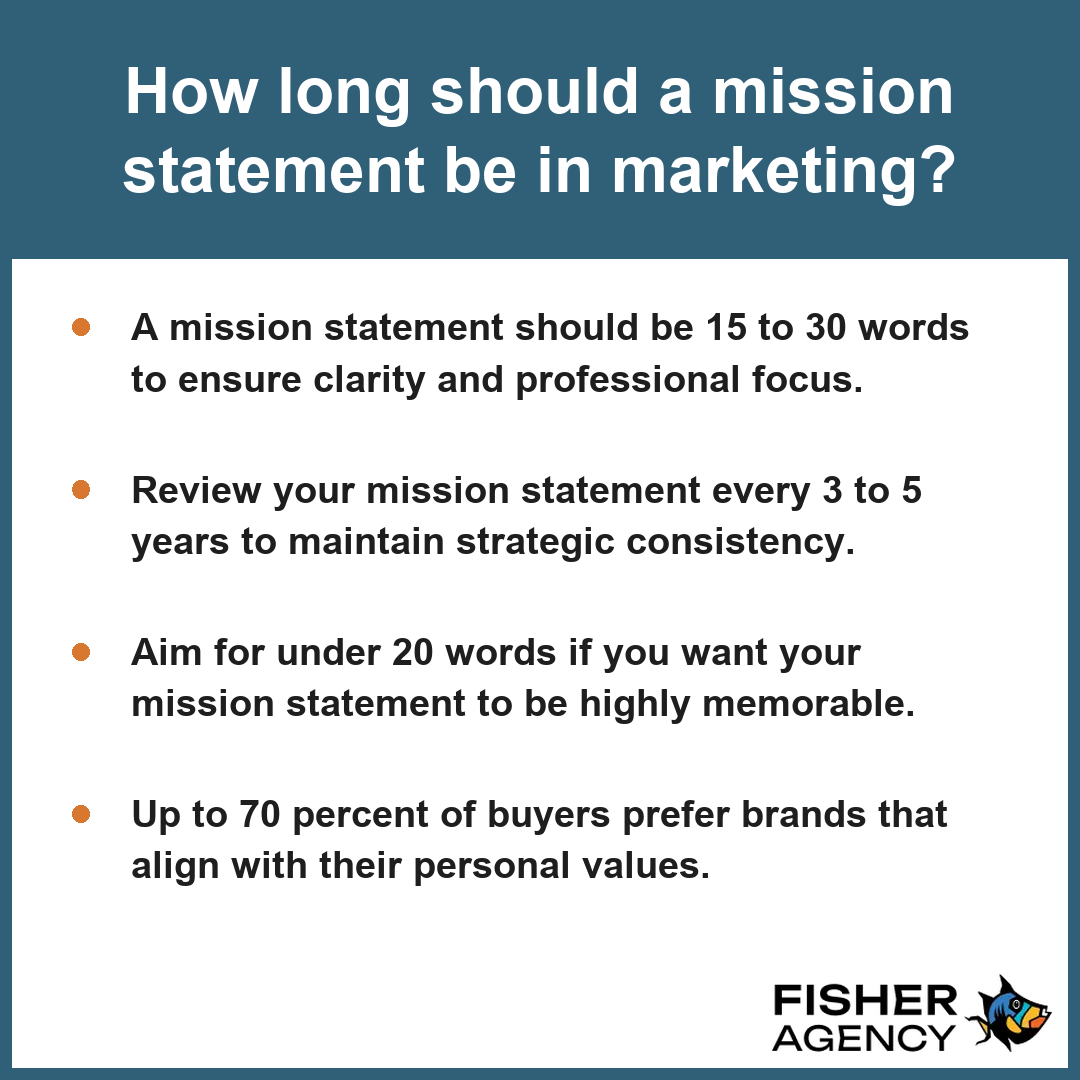
- A mission statement should be 15 to 30 words to ensure clarity and professional focus.
- Review your mission statement every 3 to 5 years to maintain strategic consistency.
- Aim for under 20 words if you want your mission statement to be highly memorable.
- Up to 70 percent of buyers prefer brands that align with their personal values.
What Are the Key Components of a Good Mission Statement?
The key components of a good mission statement consist of the essential elements that define why an organization operates, who it serves, and what value it creates. A well-crafted mission statement acts as a precise anchor for your brand messaging, ensuring that every internal decision remains aligned with the core identity of the business. According to the Journal of Business Ethics, successful mission statements are characterized by a clear declaration of how an organization intends to provide value to its key stakeholders, including its customers, its employees, and the broader community. By focusing on these fundamental building blocks, you move beyond vague corporate jargon and establish a clear, actionable foundation for your marketing plan.
| Mission Component | Functional Purpose | Strategic Objective | Avoidance Metric |
|---|---|---|---|
| Target Audience | Defines demographic reach | Precision in lead qualification | Broad, non-specific descriptors |
| Service/Product | Defines market output | Clarity in operational focus | Abstract, jargon-heavy marketing speak |
| Value Proposition | Defines core problem resolution | Alignment with stakeholder needs | Vague filler phrases like “best-in-class” |
| Guiding Philosophy | Defines ethical or geographic bounds | Decision-making consistency | Internal ambiguity or lack of scope |
- The Customer or Audience Served: Explicitly identify the specific groups or individuals who benefit from your offerings.
- The Products or Services Offered: State the tangible or intangible solutions you provide to the marketplace.
- The Core Benefit or Value Delivered: Clarify the specific problem your brand solves or the outcome you enable for your target audience.
- The Guiding Philosophy or Scope: Optional but useful details regarding your geographic reach, unique operational style, or the fundamental principles that dictate how you fulfill your purpose.
Review your current draft to ensure it avoids vague filler phrases such as “best-in-class,” which lack the specificity required to guide your team’s day-to-day tactical decisions.
To refine your mission statement, follow these tactical guidelines for drafting each core section:- Distill the “Why”: Articulate the fundamental problem your organization solves to ensure the mission remains outcome-oriented rather than feature-focused.
- Prioritize Accessibility: Use plain, professional language to ensure that your mission remains easily understood by employees, investors, and clients alike.
- Define Success Metrics: Identify at least one quantifiable outcome that would signify the successful realization of your mission statement.
- Establish Brand Boundaries: Explicitly state what your organization does not do to prevent mission creep and maintain operational focus.
- Test for Authenticity: Review the statement to ensure it reflects actual organizational practices rather than aspirational goals that contradict current capabilities.
How Long Should a Mission Statement Be in Marketing?
A mission statement should generally be between 15 and 30 words in length to maintain clarity and impact within your marketing materials. While a mission statement serves as a foundational document for your internal strategy, it must remain concise enough to be understood immediately by your team and stakeholders. Brevity helps ensure the core message remains memorable and actionable, whereas overly verbose declarations often lose their effectiveness in guiding day-to-day decisions. According to the American Marketing Association, industry standards emphasize that mission statements should be brief enough for employees to memorize, as their primary utility in marketing is to provide a clear, guiding focus for internal and external stakeholders.
| Messaging Category | Functional Purpose | Optimal Word Count | Primary Stakeholder |
|---|---|---|---|
| Slogan | Immediate Brand Recognition | 3–8 Words | External Customers |
| Mission Statement (Memorability) | Rapid Recall & Cultural Alignment | Under 20 Words | Employees |
| Mission Statement (Strategic Depth) | Operational Guidance & Core Purpose | 15–30 Words | Internal Teams & Stakeholders |
Recommended Word Counts for Brand Messaging
You may find that the most memorable examples are often under 20 words, making them easier to integrate into brand messaging and collateral. It is important to distinguish this length from that of a slogan, which typically ranges from 3 to 8 words. Because your mission statement is a tool for internal alignment rather than a customer-facing promotional phrase, it requires enough depth to define your purpose, yet enough conciseness to be communicated clearly.
- Internal alignment: Use 15 to 30 words to capture the complexity of your core purpose and audience.
- Memorability: Aim for under 20 words if you intend for the statement to be easily recited by your staff.
- Strategic focus: Avoid exceeding 30 words to prevent the statement from becoming an unwieldy paragraph that dilutes your brand messaging.
- Versatility: Ensure the text fits on diverse assets, such as investor materials, proposals, and employee onboarding documents.
Audit your existing documentation to confirm your current wording does not exceed the 30-word limit, as excessive length often signals that your core purpose lacks the necessary focus to anchor your marketing plan.
To maximize the effectiveness of your mission statement, consider these additional best practices for implementation:- Draft multiple iterations to distill your core purpose before finalizing the version for internal distribution.
- Ensure the statement aligns with your current organizational values to facilitate authentic cultural adoption.
- Test the draft by asking team members to explain the mission in their own words to verify clarity.
- Review and refine the statement during major strategic pivots to maintain its relevance to daily operations.
What Are the Different Types of Mission Statements, Such as Customer-Focused Versus Purpose-Driven?
You can distinguish between a customer-focused mission, which prioritizes the needs of your target audience to guide your positioning, and a purpose-driven mission, which emphasizes your broader societal impact to influence your brand messaging.
| Mission Type | Primary Anchor | Core Strategic Objective | Risk Factor |
|---|---|---|---|
| Customer-Focused | User success and functional outcomes | Aligning operations with market needs | Becoming perceived as purely transactional |
| Purpose-Driven | Societal impact and organizational values | Boosting identity and stakeholder engagement | Purpose-washing due to lack of authentic integration |
Buyer Preference for Values-Aligned Brands
Customer-Focused Mission Statements
Customer-focused mission statements are declarations that prioritize the specific benefits, value, and solutions delivered to the individuals or organizations you serve. These statements anchor your brand messaging by framing the organization as a direct partner in the user’s success. By highlighting the needs of your target audience, you ensure your daily operations remain aligned with the outcomes that matter most to those who purchase your offerings.
Purpose-Driven Mission Statements
Purpose-driven mission statements are those that articulate an organization’s core commitment to social impact, environmental sustainability, or a specific guiding philosophy beyond purely financial growth. Per the Academy of Management Journal, these statements often focus on values and social impact in ways that can improve organizational identity and boost employee engagement. While these can be highly effective, they require authentic operational integration to avoid the perception of purpose-washing.
How Do You Avoid Purpose-Washing?
You avoid purpose-washing by ensuring your stated commitment is measurable by actual behavior and is reflected in your internal policies. Research indicates that while 60 to 70 percent of buyers express a preference for brands aligned with their values, they remain skeptical of rhetoric that lacks evidence. Consider these indicators to maintain credibility:
- Tangible outcomes: Documented community or environmental improvements.
- Consistent resource allocation: Budgeting specifically for the stated purpose.
- Verified transparency: Regularly reporting on the progress of your social objectives.
Which Type Fits Your Target Audience?
The choice between these types depends on whether your target audience prioritizes immediate functional utility or broader social alignment. A customer-focused mission statement provides clarity for technical or commodity-based services, whereas a purpose-driven mission statement is often more effective for brands competing in crowded sectors where values serve as the primary differentiator.
Evaluate your current customer feedback loops to determine if your audience seeks functional expertise or a shared sense of ethical responsibility.
To ensure your mission statement effectively resonates with your audience, consider these strategic implementation practices:- Conduct stakeholder interviews to identify the specific societal values most relevant to your core customer base.
- Audit your existing operational processes to ensure they demonstrate tangible evidence of your stated purpose.
- Draft multiple iterations that balance functional utility with an aspirational, long-term vision.
- Establish clear internal metrics to track how your mission influences both employee retention and customer loyalty.
- Review all marketing assets to ensure tone consistency between your customer-centric solutions and your broader organizational values.
Mission Statement Versus Vision Statement and Values Statement
A mission statement, vision statement, and values statement serve distinct roles in defining an organization, despite often being confused with one another. While the mission statement focuses on current operations, the other two documents address long-term objectives and behavioral standards respectively. Per Harvard Business Review, a mission statement defines an organization’s current purpose and core business activities, whereas a vision statement articulates a future-oriented aspiration or long-term goal.
| Document Type | Primary Focus | Time Horizon |
|---|---|---|
| Mission statement | Operational purpose and output | Present tense |
| Vision statement | Future goals and impact | Future tense |
| Values statement | Guiding behavioral principles | Ongoing/Timeless |
The core distinction lies in the application of these documents within your marketing plan. A mission statement functions as the anchor for your daily brand messaging and customer-focused initiatives, ensuring your team maintains consistency. Conversely, a vision statement acts as the North Star for long-term strategic growth, while a values statement dictates the culture and ethical framework that prevents purpose-washing. These documents are not interchangeable; they must function in alignment to ensure that your external marketing represents the true nature of your internal identity. Confusing a mission statement with a slogan is a common error, so keep in mind that your mission defines internal direction while your slogan remains a short 3 to 8-word promotional phrase intended for your target audience.
Audit your current internal documentation to ensure your mission statement describes what you do today rather than incorporating aspirational goals that belong in your vision statement.
To maximize the effectiveness of these statements within your organizational strategy, consider these practical implementation tips:- Integrate your values into the performance review process to ensure employee behaviors align with stated ethical standards.
- Use the vision statement as a filter for evaluating new business opportunities or potential partnerships to maintain strategic focus.
- Draft the mission statement using active, descriptive language that highlights the specific problem your brand solves for the customer.
- Display your mission and vision internally in high-traffic areas to reinforce brand identity among team members during daily workflows.
How to Write a Mission Statement Step by Step, and Who Should Be Involved
Writing a mission statement step by step is a collaborative process that requires leadership, marketing, and frontline staff to work together over several weeks of workshops and revisions to ensure the final output reflects your organizational reality. Per the Society for Human Resource Management, developing mission statements through a collaborative process that engages stakeholders across various levels of the organization is essential for fostering internal buy-in and true organizational alignment. To develop an effective document, follow these sequential steps:
| Development Phase | Stakeholder Involvement | Key Objective | Outcome Metric |
|---|---|---|---|
| Phase 1: Purpose Definition | Executive Leadership | Identify core organizational “Why” | Operational clarity |
| Phase 2: Collaborative Drafting | Marketing & Frontline Staff | Capture diverse institutional perspectives | Inclusion of internal viewpoints |
| Phase 3: Iterative Refinement | Drafting Committee | Maintain 15-30 word count limits | Removal of vague descriptors |
| Phase 4: Operational Validation | Operational Managers | Align text with daily behaviors | Measurability of statement |
| Phase 5: Strategic Integration | Internal Communications | Embed in onboarding and strategy | Organizational alignment |
Recommended Mission Statement Word Count Range
- Identify the core purpose by defining exactly what you do, for whom you do it, and why your organization exists in its current state.
- Convene a diverse drafting committee including key leadership, marketing team members, and frontline staff to capture varied organizational perspectives.
- Brainstorm and draft multiple versions, aiming for a length of 15 to 30 words, while strictly avoiding vague descriptors like “best-in-class.”
- Refine the draft by testing it against your actual daily operations to ensure it remains realistic and measurable by observable behaviors.
- Finalize the text and determine internal placement, such as employee onboarding materials or internal strategy documents, before finalizing the mission statement for public view.
Once finalized, ensure your marketing plan aligns with the language of your mission statement to avoid the risks of purpose-washing.
To ensure your mission statement translates into actionable workplace behavior, incorporate these final implementation practices:- Audit existing internal branding materials to replace outdated language with your new mission core.
- Create a feedback loop where frontline employees can report on the mission’s real-world application during quarterly reviews.
- Develop a recognition program that rewards staff members who demonstrate the mission’s values through specific documented actions.
- Schedule an annual review session to determine if the mission still accurately reflects the organization’s evolving market position.
Frequently Asked Questions
Is a mission statement the same as a slogan?
No, a mission statement is not the same as a slogan. A mission statement is a formal declaration of your core purpose, whereas a slogan is a short, 3 to 8 word promotional phrase designed for customers. A mission statement guides internal strategy, while a slogan focuses on external marketing messaging.
What makes a mission statement good, and why do phrases like “best-in-class” weaken it?
A good mission statement is clear, specific, realistic, and measurable by behavior. Vague phrases like “best-in-class” weaken it because they lack concrete meaning and fail to provide the specific guidance needed for internal decision-making. Aim for 15 to 30 words to ensure your core purpose remains actionable and memorable.
Where should a company publish its mission statement?
You should publish your mission statement across your website About page, careers and investor materials, proposals, packaging, and employee onboarding documents. Including it in the footer of your sales collateral ensures that your target audience and partners consistently see the core purpose that anchors your brand messaging and positioning.
How often should a mission statement be reviewed or changed?
You should review your mission statement every 3 to 5 years, or immediately following significant changes to your product line, market, or ownership. While regular reviews ensure relevance, avoid frequent rewrites, as they weaken the stability of your brand. Keep the declaration focused on your current organizational purpose.
How does a mission statement shape marketing strategy, and how can you measure its effect?
A mission statement shapes your marketing strategy by anchoring your positioning, content, and goals. You measure its effect by tracking whether your pricing, hiring, and advertising reflect your stated purpose. This is vital, as 60 to 70 percent of buyers prefer brands aligned with their values, avoiding potential purpose-washing accusations.