

Branding: Components, Cost, Timeline, Strategy, Guidelines, Equity, Metrics, Trademark, Architecture, Types
Branding is the practice of shaping how a product, service, or organization is identified and perceived by people. Key aspects include cost, components, strategy, timeline, equity, guidelines, trademark, metrics, types, and architecture. Within marketing, branding connects every message, product and customer interaction to a consistent set of associations that people remember. It works through repeated exposure, where logos, language, design and experience gradually build familiarity and trust. A creative marketing agency often handles the research, naming, visual design and messaging that turn a brand idea into working assets, although in-house teams and freelancers can also carry out this work. The article covers cost, timeline, core components, strategy and equity, which together describe how a brand is built, what it takes and how its value accumulates over time.
Key Takeaways
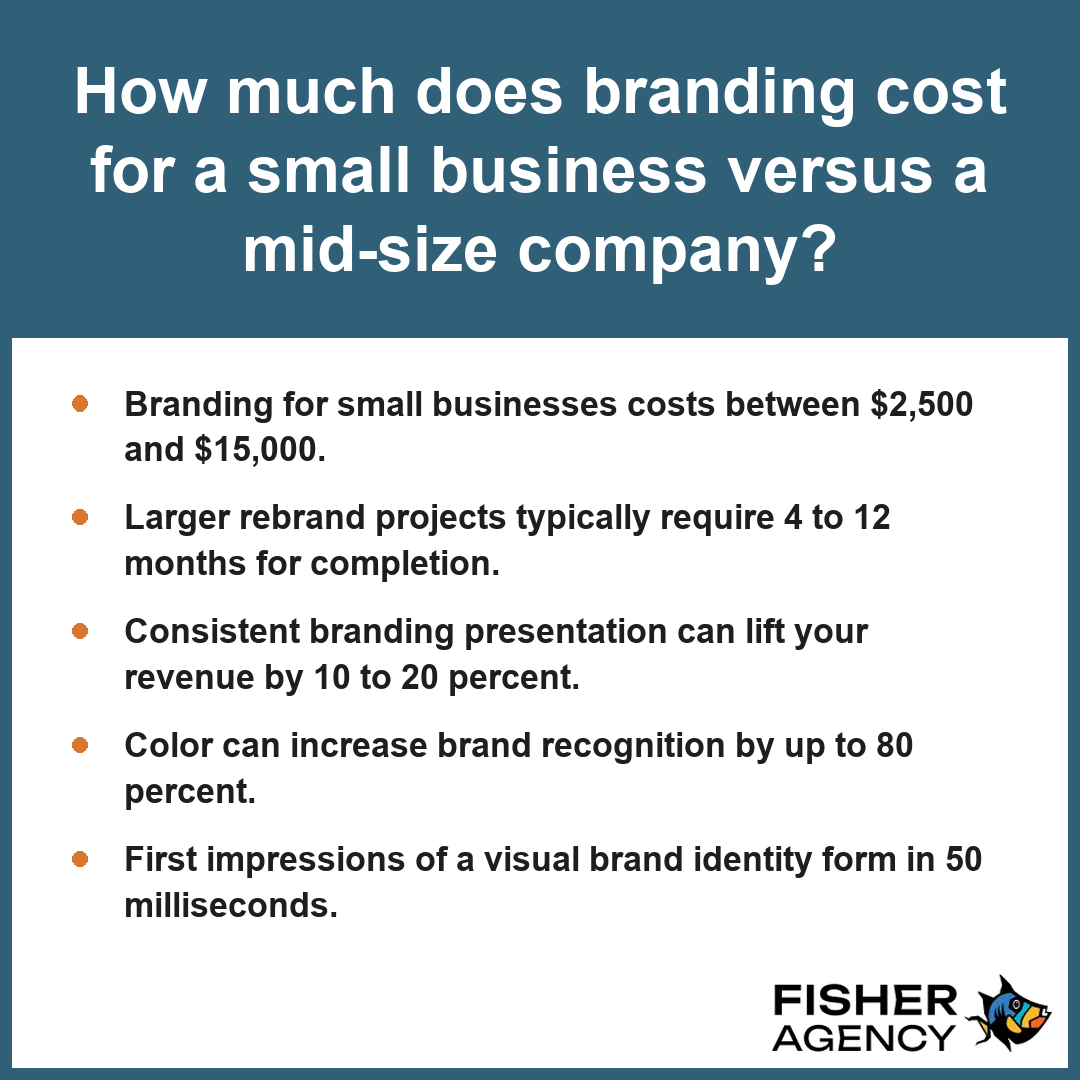
- Branding for small businesses costs between $2,500 and $15,000.
- Larger rebrand projects typically require 4 to 12 months for completion.
- Consistent branding presentation can lift your revenue by 10 to 20 percent.
- Color can increase brand recognition by up to 80 percent.
- First impressions of a visual brand identity form in 50 milliseconds.
How Much Does Branding Cost for a Small Business Versus a Mid-Size Company?
The cost of branding varies significantly based on the scale of the business, ranging from a few hundred dollars for basic freelance work to hundreds of thousands of dollars for comprehensive agency-led initiatives. These investments reflect the complexity, scope of research, and the depth of the brand identity being developed for the market.
Midpoint Investment Estimates by Branding Tier
| Business Scale | Service Level | Estimated Investment |
|---|---|---|
| Small Business | Freelancer Logo | $300 to $2,500 |
| Small Business | Identity Package | $2,500 to $15,000 |
| Mid-Size Company | Agency-Led Rebrand | $50,000 to $250,000+ |
When budgeting for these expenses, note that costs often scale not just with the size of the company, but with the volume of assets required, the number of market segments targeted, and the complexity of the brand architecture. Harvard Business Review reports that branding expenses for mid-size firms typically rise substantially compared to initial startup costs because of the intricate challenges involved in maintaining consistent messaging across diverse market segments. While a smaller firm might focus on foundational visual elements, a mid-size company usually pays for extensive strategic workshops, multi-platform design rollouts, and long-term brand guidelines. Factor in that legal protections, such as a trademark registration at $350 per class, represent a recurring administrative cost that must be managed every 10 years to maintain your legal rights.
Evaluate your internal capacity to maintain design consistency across all digital and physical channels before deciding whether your current budget should prioritize foundational assets or advanced strategic depth.
Beyond initial design fees, consider these additional expenses necessary for a complete branding rollout:- Brand Assets: Costs for custom photography, licensed stock imagery, and bespoke typography licensing.
- Digital Implementation: Website development and user interface (UI) adjustments to match the new brand identity.
- Marketing Collateral: Printing costs for physical materials and production of branded merchandise or packaging.
- Internal Training: Workshops for staff to ensure consistent brand voice and messaging application across departments.
How Long the Branding Process Takes From Research to Rollout
The branding process takes between 6 and 12 weeks for a small identity project, while a larger rebrand requires 4 to 12 months from initial research to final rollout. These timelines reflect the complexity of transitioning from conceptual strategy to the application of visual systems across all customer touchpoints. Smaller engagements typically focus on core identity elements, whereas larger initiatives involve stakeholder alignment, multi-phase research, and extensive implementation across complex organizational structures. Per the American Marketing Association, such strategic brand development processes typically require an approximation of three to six months to move from initial research and brand identity formulation to final market implementation.
| Project Scope | Duration (Weeks) | Key Strategic Focus | Complexity Level |
|---|---|---|---|
| Small Identity | 6 – 12 | Core visual assets and foundational identity | Low: Streamlined execution |
| Large Rebrand | 16 – 48 | Stakeholder alignment and multi-channel integration | High: Organizational-wide rollout |
Branding Project Timelines (in Weeks)
The progression of these projects generally adheres to a structured sequence to ensure the final output aligns with long-term goals:
- Discovery and research: Identifying the target audience and competitive landscape.
- Strategic development: Defining the brand promise, personality, and positioning statement.
- Identity design: Creating the logo, typography, color palette, and imagery style.
- Application and guidelines: Developing brand guidelines and applying assets to specific collateral.
- Final rollout: Deploying the new identity across all internal and external channels.
Before committing to a specific timeline, audit your existing internal resources to determine how many departments must approve each stage of the rollout.
The branding process follows a rigorous progression to ensure cohesive implementation:- Concept validation: Testing preliminary visual directions against audience feedback.
- Asset production: Executing the design phase across print and digital environments.
- Guidelines finalization: Codifying usage rules within a comprehensive brand manual.
- Deployment and launch: Executing the transition plan across all internal and public channels.
Core Components of Branding Beyond a Logo
Core components of branding beyond a logo encompass the wide array of verbal and visual assets that collectively communicate your organization’s identity to the market. While a logo serves as the primary identifier, effective branding relies on the consistent alignment of these foundational elements to build immediate recognition and consumer trust. Per the Journal of Marketing, effective brand positioning relies on establishing a unique value proposition that aligns with specific target market needs to create a sustainable competitive advantage.
| Brand Asset Category | Functional Role | Strategic Objective |
|---|---|---|
| Brand Name | Linguistic Identification | Immediate Market Recognition |
| Color Palette | Visual Psychology | Increased Brand Recall |
| Typography | Visual Tone Setting | Perceptual Consistency |
| Tagline | Concise Communication | Value Proposition Retention |
| Voice and Tone | Linguistic Persona | Touchpoint Uniformity |
| Imagery Style | Visual Curation | Brand Identity Alignment |
| Packaging | Tactile Manifestation | Point-of-Sale Conversion |
| Brand Promise | Organizational Commitment | Sustainable Competitive Advantage |
Brand Recognition and Engagement Metrics
- Brand Name: The primary linguistic anchor used to identify the organization or product.
- Color Palette: A strategic selection of hues known to influence recognition by up to 80 percent.
- Typography: Specific font families that establish the visual tone of all written communications.
- Tagline: A concise phrase that summarizes the brand promise in a memorable way.
- Voice and Tone: The established linguistic style used across all customer touchpoints, from social media to service documentation.
- Imagery Style: Consistent photographic or illustrative standards that dictate how visual content is curated.
- Packaging: The physical manifestation of your design identity that influences the initial purchase experience.
- Brand Promise: The underlying commitment you make to the customer, which serves as the core of your value proposition.
Audit your current customer touchpoints to ensure that your visual and verbal elements remain consistent, as consumers often require 5 to 7 exposures to these components before a message effectively registers.
To effectively integrate these assets into a cohesive market strategy, consider the following implementation practices:- Conduct a linguistic audit to ensure your brand name avoids negative cultural connotations in target international markets.
- Develop a comprehensive style guide that mandates the specific hex codes, font weights, and spacing requirements for all visual touchpoints.
- Create a message hierarchy that defines how your core value proposition is adapted for different social media and direct-response channels.
- Establish a periodic review schedule to verify that all outward-facing content adheres to the defined voice and tone personality.
- Implement A/B testing on packaging and digital collateral to measure how specific imagery styles impact conversion rates among key demographics.
What Is Brand Strategy, and How Do Purpose, Positioning, and Target Audience Shape Branding?
Brand strategy is the foundational blueprint that aligns a company’s internal purpose, competitive positioning, and target audience to ensure branding consistently communicates a unified identity across all touchpoints.
| Strategic Pillar | Primary Objective | Operational Output | Metric of Success |
|---|---|---|---|
| Brand Purpose | Define organizational “Why” | Authentic internal culture and values | Consumer emotional loyalty |
| Market Positioning | Establish competitive distinctiveness | Market category and value proposition | Perceived market differentiation |
| Target Audience | Identify demographic and psychographic needs | Customer-centric messaging strategy | Conversion and brand relevance |
| Positioning Statement | Focus creative and tactical execution | Unified internal compass for communications | Consistency across all touchpoints |
How Purpose Defines Why a Brand Exists
Purpose serves as the internal anchor for your branding, moving beyond profit to define the primary reason your organization operates. Per the Marketing Science Institute, purpose-driven branding focuses on integrating a company’s social or environmental goals with core operations to foster stronger emotional connections and lasting consumer loyalty. It informs the emotional resonance of your messaging and the authenticity of your brand promise. Establishing a clear purpose allows you to make consistent operational decisions that your audience can recognize and support over time.
How Does Positioning Set a Brand Apart?
Positioning determines your specific place in the market relative to competitors. It uses the following elements to create a distinct perception in the minds of consumers:
- Market category relevance
- Primary competitive advantages
- Distinctive functional or emotional benefits
- The specific problem your solution resolves
What a Positioning Statement Should Include
A effective positioning statement must articulate your target market, the category in which you compete, the key benefit you provide, and the evidence that supports your claim. It acts as an internal compass for all creative work.
How Target Audience Research Guides Branding Decisions
Understanding your audience ensures that your branding efforts are not wasted on generic messaging. By researching demographics, psychographics, and pain points, you can tailor your tone and visual style to maximize engagement. Since consumers often form impressions of a visual identity in approximately 50 milliseconds, your research must inform a design that speaks directly to the specific preferences of your target group.
Analyze your current messaging against your primary competitor’s positioning statement to identify gaps where your unique value proposition can be more clearly articulated.
To effectively operationalize your brand strategy, consider these actionable steps:- Conduct internal workshops to distill stakeholder values into a singular, actionable mission statement.
- Map customer journey touchpoints to identify potential gaps in message consistency.
- Analyze competitor marketing collateral to find unique white space for your value proposition.
- Develop a brand voice guideline to ensure all communications mirror the core organizational identity.
- Implement feedback loops that correlate customer sentiment data with specific strategic pillars.
Brand Equity Explained Through Aaker’s and Keller’s Models
Brand equity explained through Aaker’s and Keller’s models provides a systematic framework for measuring the intangible value branding adds to your products or services beyond their functional utility. Per the University of California Berkeley, David Aaker initially characterized brand equity as a multidimensional construct encompassing brand loyalty, name awareness, perceived quality, and brand associations. David Aaker defines this equity as a set of five distinct assets that create a competitive advantage, while Kevin Lane Keller focuses on the psychological depth of the consumer relationship through a structured pyramid of associations. By evaluating these dimensions, you can determine how effectively your efforts translate into sustainable market strength.
| Strategic Framework | Core Perspective | Primary Focus | Valuation Metric |
|---|---|---|---|
| Aaker’s Model | Asset-Based | External market leverage and structural competitive advantage | Long-term firm valuation and market strength |
| Keller’s Model | Psychological-Based | Individual consumer journey from recognition to advocacy | Depth of consumer resonance and relationship quality |
- Aaker’s Five Assets: Brand awareness, customer loyalty, perceived quality, proprietary assets, and strong mental associations.
- Keller’s Customer-Based Pyramid: Identity, meaning, response, and finally, the resonance achieved through deep psychological bonding.
Aaker’s approach emphasizes external market leverage, such as the power of a trademark or the historical reputation of a firm, whereas Keller’s model tracks how individuals progress from mere recognition to intense brand advocacy. Using these models allows you to identify whether your branding is driving simple familiarity or deeper, more profitable consumer attachments. When you analyze these components, you can pinpoint whether your current marketing investments are actually increasing your long-term valuation or merely maintaining baseline visibility.
Audit your current customer feedback against these specific categories to identify which of the five Aaker assets currently provides the weakest return on your investment.
Applying these frameworks in practice requires shifting focus from theoretical metrics to actionable brand management:- Conduct sentiment analysis on social platforms to quantify the emotional “resonance” described in Keller’s final pyramid stage.
- Audit existing patent portfolios and trademarks to calculate the specific “proprietary asset” value defined by Aaker.
- Map customer touchpoints against Keller’s four-stage hierarchy to identify specific gaps where consumers abandon the brand journey.
- Benchmark perceived quality against direct competitors to determine the pricing premium your brand can sustain in the current market.
Frequently Asked Questions
What are the different types of brands, such as personal, employer, and product brands?
Common brand types include corporate brands, product brands, personal brands, service brands, retail or private-label brands, employer brands, and co-brands or ingredient brands. Each category serves a specific purpose, whether identifying a company, distinguishing an individual’s professional persona, or marketing a particular item to a target audience.
What is the difference between a branded house, a house of brands, and endorsed brands?
These brand architecture strategies differ in how they manage relationships between offerings: a branded house uses one master brand across all products, a house of brands maintains separate independent brands, and endorsed brands feature a sub-brand backed by a parent entity to provide credibility and structure to the organization.
What should a brand guidelines document include to keep branding consistent?
A brand guidelines document should include technical specifications for logo clear space, minimum sizes, hex or CMYK/Pantone color values, font families, and tone rules. These details ensure that teams apply the visual and verbal elements of your identity uniformly across all channels, maintaining a professional and recognizable look.
Do I need to trademark my brand name, and when can I use ™ versus ®?
Yes, you should obtain a trademark to secure legal protection for your name. You may use the ™ symbol to signal a claim to an unregistered mark, while the ® symbol is reserved for marks with official federal registration. This registration requires a $350 fee per class and lasts 10 years.
How do you measure the success of branding using awareness, net promoter score, and price premium?
You measure success by evaluating brand equity through awareness, loyalty, perceived quality, and customer perceptions. Consistent branding can lift revenue by 10–20 percent and increase recognition by up to 80 percent through color, though success is ultimately defined by the long-term value generated by your established, distinct identity.